

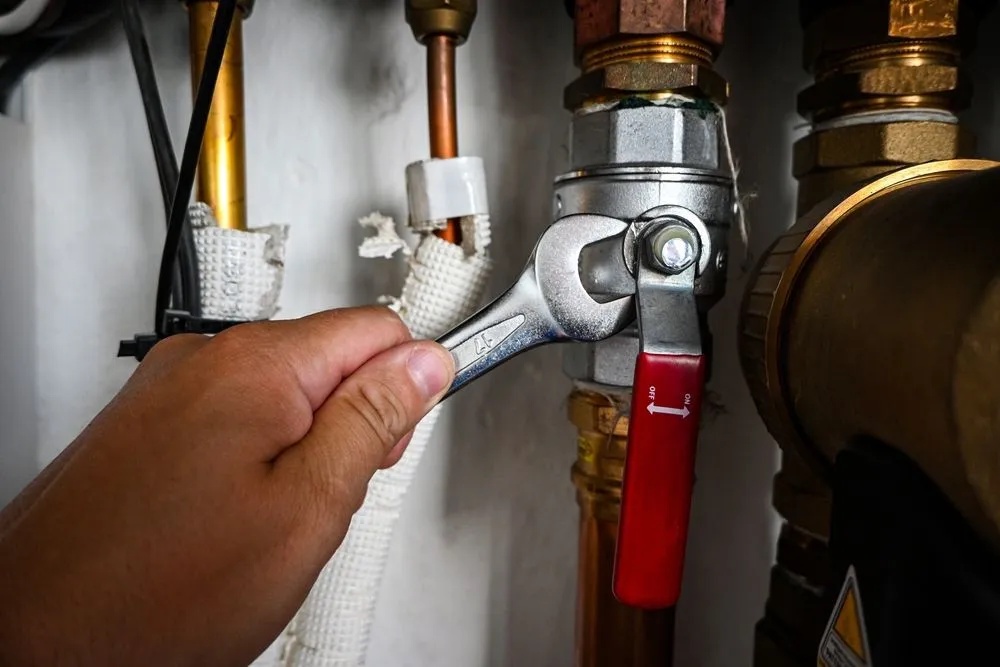
A whole house water softener goes on the main water line, right where water enters your home. It sits after the well pressure tank or the city meter and before the water heater, so every hot and cold tap inside gets soft water. A salt-based unit also needs a nearby drain, a power outlet, and floor space for a brine tank.
For most Tuscarawas County homes that means a basement or utility room. It's a job a plumber can usually finish in a day, but where it goes and how it's plumbed decide whether it works well for years to come or becomes a nuisance. Here's what to plan for.
Where to put the softener
Pick a spot that checks these boxes:
- Close to the main line. You want the water treated before it branches off to the water heater, bathrooms, kitchen, and laundry.
- Downstream of any sediment or iron filter. The softener's resin does better when grit and rust are already out of the water.
- Near a floor drain, sump, or laundry standpipe. The softener discharges salty water during regeneration, and that needs a legal, properly air-gapped place to go.
- Near a grounded outlet. The control head runs on a small power supply.
- Level, dry, and easy to reach. You'll be lifting salt bags into it, and a plumber will need room to service it later.
- Protected from freezing. An unheated garage or an exposed corner of a crawlspace is a poor choice for an Ohio winter.
What a salt-based softener actually needs
A salt-based system uses ion exchange. Resin beads grab the calcium and magnesium that make water hard, then flush them away with a salt brine during regeneration. It's the method that removes hardness, rather than just changing how it behaves in your pipes.
The install is more than hooking up two pipes. A proper job includes:
- A bypass valve, so you can shut the softener off or service it without losing water to the whole house.
- Shutoff valves and unions on either side, so the unit can be removed later without cutting pipe.
- A drain line for the regeneration cycle and a separate overflow line from the brine tank.
- Programming the control head for your household size and your water's hardness.
It's well documented that water in this part of Ohio runs hard. A water test still matters, because the number you program into the softener affects how much salt and water it uses. Well owners should also ask about iron, since iron can foul the resin if it isn't handled first.
Leave a few lines untreated
Softened water isn't needed for everything. Outdoor spigots are the usual exception, since watering the lawn with softened water just wastes salt and capacity. Many homeowners also keep one cold tap, often in the kitchen, on unsoftened water because they prefer the taste. A plumber can set those up while the pipes are open, and it's much easier to do during the install than after.
If you want a softener and a filter
These two do different jobs. A softener handles dissolved hardness. A filter handles things like sediment, chlorine taste, or other contaminants. When you install both, the order matters:
- Sediment filter first, to catch sand, rust flakes, and grit.
- Any specialty filter, such as one for iron or taste, next.
- Softener after that.
- Water heater last.
Putting them in the wrong order shortens resin life and makes filter cartridges clog faster. Leave room for cartridge changes, too. You'll thank yourself the first time a housing needs to come off.
What changes the price of an install
Prices vary a lot from house to house, and anyone quoting a number without seeing your basement is guessing. These are the things that move it:
- The equipment itself: capacity, a metered versus timer-based control head, and whether you add a filter.
- Distance to the main line, drain, and outlet. A longer run means more pipe and more labor.
- Pipe material and condition. Older galvanized or corroded sections may need replacing before you can connect to them.
- Missing pieces. A house with no nearby drain or outlet needs extra work.
- Well versus city water. Wells often need pre-filtration and a closer look at where the tie-in goes relative to the pressure tank.
- Removing an old unit. A replacement job includes disconnecting and hauling away the old tank.
Doing it yourself or hiring it out
Plenty of handy homeowners install a softener themselves, and it can be done with basic plumbing skills. You'll typically want a pipe cutter, a few wrenches, tubing or fittings suited to your pipe type, thread tape, and a level. The risks come from the details: a leaky connection behind a finished wall, a drain without an air gap, or a bypass installed backward. Any of those can cause a flood or a drain backup. If you're cutting into the main line, or you aren't sure your pipes can handle it, hiring a plumber is cheap insurance.
Common questions
Can a water softener affect my water pressure?
It can, but it shouldn't noticeably. A properly sized softener causes only a small pressure drop. If pressure dips after an install, the usual causes are an undersized unit, a clogged resin bed, a partly closed valve, or old restrictive pipe feeding the softener. Removing hardness scale from fixtures can actually make flow feel better over time.
How much does it take to install a water softener?
It depends on the equipment and your plumbing layout. The factors listed above, such as pipe runs, drain access, electrical, filtration, and removal of an old unit, drive most of the difference between a simple install and a complicated one. A plumber who looks at the space can give you a firm number.
What tools do I need to install a water softener?
For a basic DIY install, expect a tubing or pipe cutter, adjustable wrenches, thread tape, a level, a bucket, and connection fittings matched to your pipe type. If your pipes are copper, you may also need soldering equipment unless you use push-fit connectors.
Can you put a water filter on your whole house?
Yes. A whole house filter installs on the main line just like a softener, and it treats every tap. The right type depends on what's in your water, so test first. Sediment, taste, and odor problems are handled differently from iron or bacteria.
Do I really need a reverse osmosis system with well water?
Not necessarily. Reverse osmosis is a point-of-use drinking water treatment, usually under the kitchen sink. Whether you need one depends on your test results. Many well owners do fine with a softener and the right filtration, then add reverse osmosis only if a specific contaminant calls for it.
Getting it installed locally
Geer Plumbing Solutions installs water softeners and water filters for homes across Tuscarawas County. We like to look at your water test and your basement first, then explain what we'd recommend and why before any work starts. You can reach us at 330-432-8073, Monday through Friday, 8 am to 5 pm.