

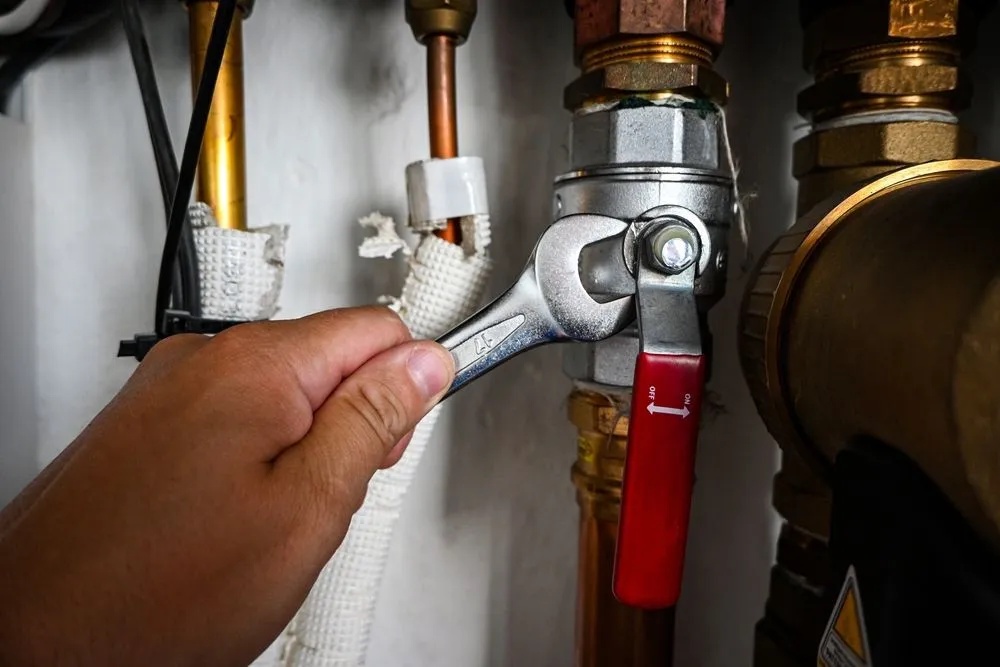
A water conditioning system changes what's in your water so it's easier on your pipes, appliances, skin, and laundry. In Tuscarawas County, that usually means dealing with hard water. Dissolved calcium and magnesium leave scale inside pipes and water heaters and spots on glass. Hard water in this area is well documented.
Most homes here get the best results from a water softener, sometimes paired with a filter. The right setup depends on your water source and on what a test shows. Here's how to sort out what you need.
What "water conditioning" actually covers
The term gets used loosely. Some companies use it as another word for a softener. Others mean a whole package of treatment equipment. It helps to match the equipment to the problem you're seeing.
| What you notice | Likely cause | Common approach |
|---|---|---|
| White crust on faucets, cloudy glasses, soap that won't lather | Hardness (calcium and magnesium) | Water softener |
| Orange or rust-colored stains in sinks and tubs | Iron in the water | Iron-specific filtration, sometimes alongside a softener |
| Rotten-egg smell | Sulfur compounds | Filtration matched to the test results |
| Chlorine taste or odor, sediment | Treatment byproducts or particles | Carbon or sediment filter |
| Water heater that's noisy or losing efficiency | Scale buildup on the heating surfaces | Treating the hardness at the source |
Plenty of homes have more than one of these going on at once. That's why a test comes before a purchase.
Why hardness is the main event around here
Hard water is a fact of life in Tuscarawas County. Groundwater picks up minerals as it moves through the rock and soil underground, and those minerals don't go away when the water reaches your tap.
Over time, hardness shows up in a few ways:
- Scale inside water heaters. A layer of mineral buildup makes the heater work harder and can shorten its life.
- Clogged aerators and showerheads. Flow slowly drops as the holes narrow.
- Appliance wear. Dishwashers and washing machines both deal with scale.
- More soap and detergent. Hard water fights with soap, so you use more for the same result.
- Dry-feeling skin and stiff laundry. Mineral residue is often the reason.
Your exact hardness can still differ from your neighbor's. It depends on whether you're on a well or a public supply and on where your property sits. Test your own water instead of guessing from a county-wide average.
Softener, salt-free conditioner, or filter?
These three get lumped together, but they do different jobs.
A water softener uses ion exchange. It swaps the hardness minerals for sodium or potassium, and it periodically flushes itself clean with a salt or potassium brine. It actually removes hardness from the water, which is why it's the usual answer for scale problems.
A salt-free conditioner doesn't remove the minerals. It changes how they behave so they're less likely to stick to surfaces. Some people like that it needs no salt and no drain line. Others find it doesn't deliver the soft feel they wanted. Ask any installer what results to realistically expect with your water.
A water filter takes out particles, chlorine, and certain contaminants. Filters generally don't fix hardness on their own. For homes with several issues, a softener and a filter often work as a team.
Start with a water test
A good test tells you your hardness level, and it can also flag iron, pH, and other things that affect which equipment makes sense. If your home is on a well, ask about a fuller test, since well water can vary a lot and may carry bacteria or other concerns that a softener won't touch.
Two practical points:
- Hardness is measured in grains per gallon. That's the number the softener gets programmed around.
- Iron changes the equation. Even small amounts can foul softener resin over time, so it's worth knowing about before you size a system.
What installation involves
Installing a softener or filter is plumbing work, and the details matter. The unit usually goes where the main water line enters the house, so every fixture gets treated water. A typical job includes:
- Choosing a spot near the main line with room to service the tank and refill salt.
- Adding a bypass valve so you can isolate the unit without shutting off water to the house.
- Connecting the inlet and outlet lines with proper fittings.
- Running a drain line for the regeneration cycle, with an air gap so wastewater can't back up into the unit.
- Providing a nearby electrical outlet, since most units have a timer or controller.
- Setting the hardness level, then testing the water and checking every connection for leaks.
Many homeowners also decide whether to leave outdoor spigots and sometimes a cold-water kitchen tap on untreated water. That's a preference worth discussing before the work starts.
Frequently asked questions
How does a water conditioner system work?
It depends on the type. A salt-based softener passes water through resin beads that trade hardness minerals for sodium or potassium, then flushes and recharges itself on a schedule. A salt-free conditioner changes how minerals form scale instead of removing them. A filter catches particles or contaminants as water passes through.
Does a water softener fix well water?
It fixes hardness, and with the right setup it can handle small amounts of iron. It won't make well water safe to drink if the problem is bacteria or another contaminant. For that you need testing and the right treatment, such as filtration or disinfection chosen for what the test finds.
What number should my water softener be on?
Set it to your water's hardness in grains per gallon, based on a test. If your water also contains iron, many installers add a bit to the setting to compensate. Setting it too low lets hardness through. Setting it too high wastes salt and water.
Does a water softener increase my water bill?
Slightly, since each regeneration cycle uses some water. Most households barely notice the difference. A properly set softener also avoids unnecessary cycles, and you'll buy salt on top of the water use.
How do you plumb a water softener?
You tie it into the main supply line with a bypass valve, connect inlet and outlet to the right ports, and run a drain line with an air gap. Getting the flow direction right and sealing the connections matters, and a mistake can mean leaks or untreated water. That's the kind of job where a licensed plumber earns their keep.
Getting it done right
If you're sorting out hard water in Tuscarawas County, Geer Plumbing Solutions installs water softeners and water filters. We take an education approach, so we'll explain what your water is doing and why we'd recommend one setup over another. We're open Monday through Friday, 8 am to 5 pm, at 330-432-8073.