

An under-sink water filtration system cleans the water at one tap, usually the kitchen faucet. It improves the taste and smell of your drinking and cooking water, and some types remove much more than that. What it won't do is soften your water. If you live in Tuscarawas County, where hard water is well documented, that distinction matters.
Hardness is dissolved calcium and magnesium. A standard under-sink filter isn't built to remove it in any meaningful amount. So the scale on your shower door, the crust on your faucets, and the buildup inside your water heater all keep happening unless something treats the water at the main line. A good setup often uses both: a softener for the house and an under-sink filter for the glass in your hand.
What an under-sink filter actually does
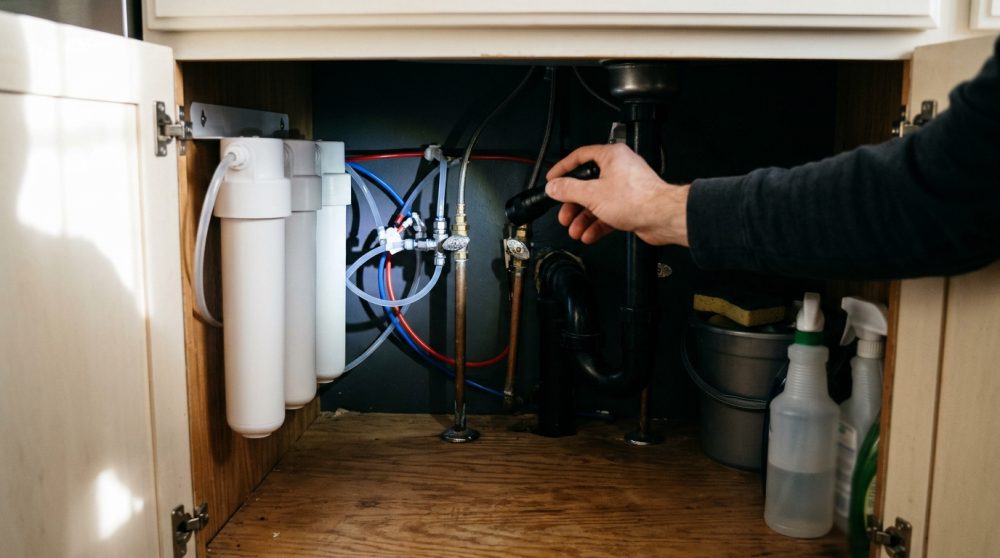
Most under-sink systems fall into two groups. Both are installed in the cabinet below the sink and send filtered water to the kitchen faucet or a small dedicated faucet.
| Type | Good for | Keep in mind |
|---|---|---|
| Carbon-based filter | Chlorine taste and odor, and some other contaminants depending on the cartridge | Simple and compact, but it doesn't remove dissolved minerals |
| Reverse osmosis (RO) system | The widest range of drinking-water concerns, including dissolved solids | Needs a drain connection and more cabinet space, and it makes a little wastewater |
Check what a cartridge is certified to remove before you buy. A label that says "filters water" tells you very little. A certification listing tells you exactly which contaminants it was tested against.
Why hard water and under-sink filters belong in the same conversation
Hard water is tough on small filter parts. Scale can shorten the life of cartridges and, in an RO system, the membrane. Feeding softened water to an under-sink system often helps it last longer and run better.
That is why the order of operations matters. Treat the whole house first if hardness is the main complaint, then add the drinking-water filter. One caution: softened water adds a small amount of sodium. If anyone in your home watches their sodium intake, an RO tap at the kitchen sink is a common way to handle that.
Point of entry or point of use?
These two terms come up constantly, and they're easy to mix up.
- Point of entry treats all the water as it comes into the house. Softeners and whole-house filters work this way. It protects pipes, fixtures, water heaters, and laundry.
- Point of use treats water at a single tap. Under-sink filters work this way. It's aimed at what you drink and cook with.
If your frustration is spots, scale, and dry skin, you want point of entry. If it's the taste of your drinking water, or a specific contaminant on a test report, you want point of use. Plenty of homes want both.
Test before you choose
The right system depends on what's in your water, not on what's popular. A test tells you your hardness level and whether there's anything else worth treating, like iron or a sulfur smell. This is especially important if you're on a private well, since well water can differ a lot from one property to the next, even within the same town. Your public water supplier's annual report is a reasonable starting point if you're on municipal water.
What installation involves
A basic under-sink install is a manageable job for some homeowners, but a few details trip people up:
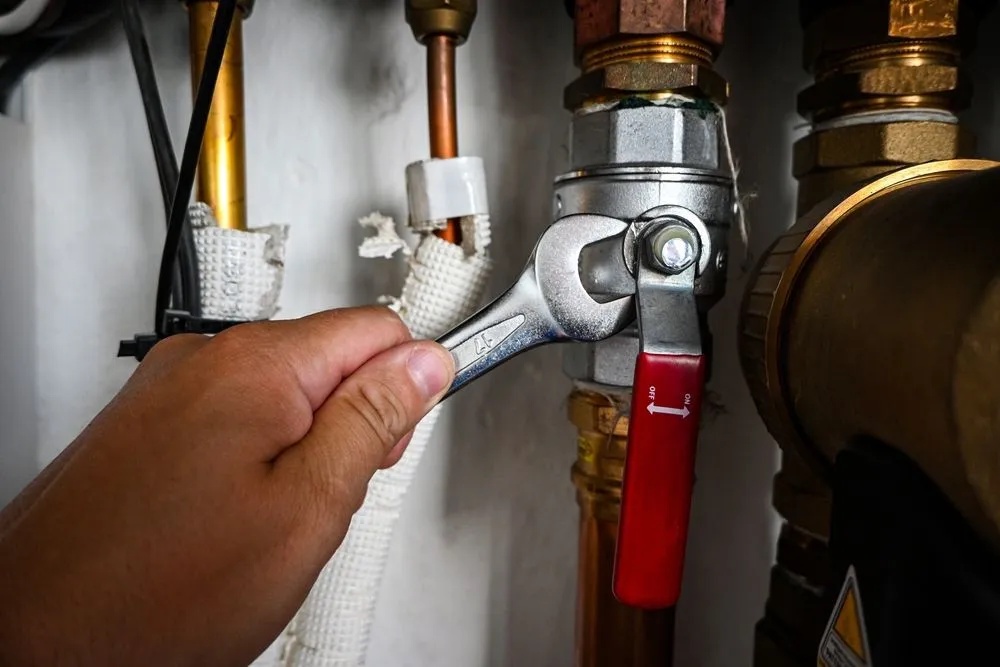
- Shut off the cold supply to the kitchen faucet and relieve the pressure.
- Tee into the cold line with the supplied fitting.
- Mount the filter housing where you'll be able to reach it later for cartridge changes.
- Drill the countertop or sink deck if you're adding a separate faucet. Stone and stainless steel both need the right bit.
- For RO, connect the drain saddle to the drain line and set up the storage tank.
- Flush the system and check every connection for slow drips over the next day or two.
The most common problems are over-tightened plastic fittings, a drain saddle placed where it can back up, and a cabinet that's too crowded to change cartridges without a fight. It's worth planning where everything will sit before you start drilling.
Where the softener loop comes in
If you're adding a softener alongside a filter, you'll hear the term "softener loop." It's the set of pipes and valves that lets water route through the softener, or around it. Done right, you can service or shut down the softener without losing water to the whole house. Some homes are already plumbed with a loop near the water heater or main line. Others need one built. It's one of the details a plumber will check before quoting the job.
Frequently asked questions
How do I install an under-sink water filter system?
You tee into the cold water line, mount the filter housing, connect tubing to the faucet, and flush the system. A reverse osmosis unit also needs a drain connection and a storage tank. If the cabinet is tight or you'd rather not drill your countertop, that's a reasonable point to hire it out.
What is a softener loop?
It's the pipe layout around a water softener that includes a bypass. The bypass lets you isolate the softener for service while keeping water flowing to the house. Some homes are pre-plumbed with one, and others need it added.
Do I need a dual tank water softener?
Most households do fine with a single tank. A dual tank unit has two resin tanks, so one can refresh itself while the other keeps supplying soft water. It makes sense for large families, heavy water use, or anyone who truly can't have a gap in soft water. For a typical home, a correctly sized single tank is usually enough.
What are the best water filter systems for well water?
There isn't one best answer, because it depends on the test results. Well water might call for a sediment filter, a softener, iron treatment, or a combination. Test first, then match the equipment to what you find.
How long does it take a plumber to install a water softener?
It varies with the layout. A home that's already pre-plumbed with a loop goes faster than one that needs new piping, a drain line, and an electrical outlet nearby. Ask for a time estimate after the plumber has seen your basement or utility area.
Sorting out your own setup
If you're weighing a softener, a drinking-water filter, or both, Geer Plumbing Solutions installs water softeners and water filters in New Philadelphia, Dover, and the surrounding Tuscarawas County communities. We'll walk through what your water needs and explain the reasoning behind each recommendation. You can reach us at 330-432-8073, Monday through Friday, 8 am to 5 pm.