

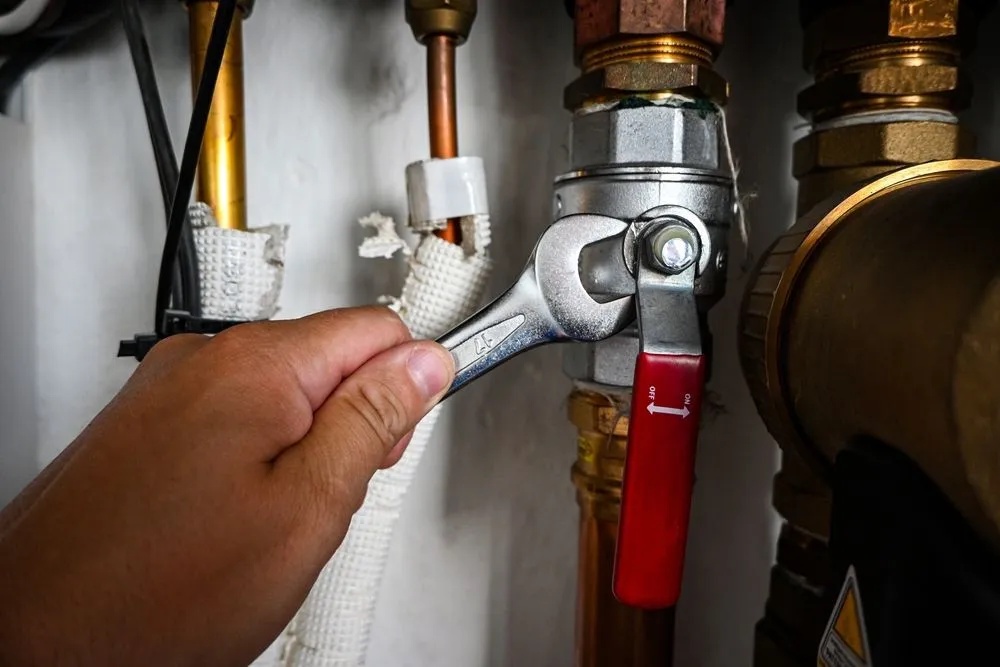
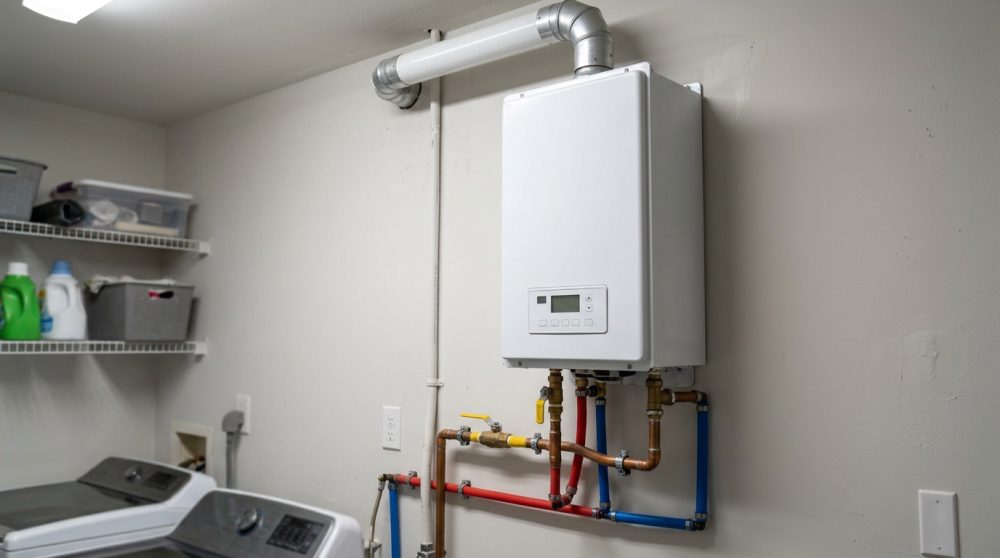
Neither one is simply "better." A tank water heater costs less up front and is easier to install or replace. A tankless unit gives you hot water for as long as you need it and frees up floor space, but it costs more and often needs new gas, venting or electrical work. The right pick depends on how much hot water your household uses at once, what fuel you have, and what your house can support.
Whichever you choose, a couple of small add-ons can make a big difference in how it performs and how long it lasts. An expansion tank protects your plumbing from pressure spikes, and a recirculation pump cuts the wait for hot water. Both are covered below.
Tank vs. tankless at a glance
| Tank (storage) | Tankless (on-demand) | |
|---|---|---|
| How it works | Keeps a full tank hot around the clock | Heats water only when a tap opens |
| Upfront cost | Lower | Higher, especially if the house needs upgrades |
| Hot water supply | Limited by tank size, then a recovery wait | Continuous, up to the unit's flow limit |
| Space | Needs a floor footprint | Compact, often wall-mounted |
| Standby heat loss | Yes, the tank stays hot all day | Essentially none |
| Installation demands | Usually a straightforward swap | May need a larger gas line, new venting or a heavy electrical circuit |
| Maintenance | Occasional flushing, anode checks | Regular service, especially with hard water |
Tankless units save energy mostly because they don't keep reheating stored water. How much that saves you depends on how much hot water you use, so be wary of any promise of a specific savings number.
The other options in the mix
Tank versus tankless isn't the whole menu. A few other designs are worth a look:
- Standard atmospheric-vent gas tank: the traditional choice, vented up a chimney or flue by natural draft.
- Power vent tank: uses a fan to push exhaust out through plastic pipe, which helps when there's no usable chimney. It needs an electrical outlet and usually a condensate or drain consideration.
- Electric tank: simple, no venting, but it needs the right circuit and can cost more to run than gas, depending on local rates.
- Heat pump (hybrid) water heater: pulls heat from the surrounding air and uses far less electricity. It wants a roomy, well-ventilated spot.
- Propane tankless: a good fit where natural gas isn't available. It needs a properly sized propane supply and venting just like any gas unit.
For gas models, venting is often the deciding factor. If your current heater vents through a chimney, switching to a tankless unit or a power vent model means running new vent pipe through a wall or roof. That's part of the real cost of the project.
The expansion tank: a small part that protects a lot
When water heats up, it expands. In an open system, that extra volume pushes back into the city main. Many homes now have a backflow preventer or pressure-reducing valve at the water meter, which closes the system. The expanding water has nowhere to go, so pressure climbs every time the heater fires.
A thermal expansion tank gives that water somewhere to go. It's a small steel tank with an air cushion behind a rubber diaphragm, and it absorbs the extra volume. Without one, the pressure spikes can stress the water heater, fixtures, supply lines and the pressure relief valve, which may start to drip.
A proper installation usually looks like this:
- Shut off the water and power or gas to the heater, then drain the pressure.
- Tee the tank into the cold supply line, close to the heater, with a shutoff in between where practical.
- Support the tank so its weight isn't hanging on the pipe, especially when it's mounted sideways or upside down.
- Set the tank's air pre-charge to match your home's static water pressure, before it goes into service. This step is the one most often skipped.
- Restore water, check for leaks, and confirm pressure stays in a safe range as the heater cycles.
Code requirements vary by area, and your inspector or plumber can tell you what applies. Tankless heaters hold very little water, so they're less prone to this problem, but check the manufacturer's instructions for your model and your plumbing setup.
Recirculation pumps: shorter waits for hot water
If you wait a long time at a faucet for the water to warm up, a recirculation pump can help. It moves hot water through the pipes so it's already near the tap when you open it. There are two main setups:
- With a dedicated return line: a separate pipe carries water back to the heater. It's efficient, but it takes the most work if the house wasn't built with one.
- Without a return line: the pump uses the cold water pipe as the return path. It's easier to retrofit, though the cold side runs slightly warm for a while.
Most pumps can run on a timer or temperature control so they don't circulate all day. That matters because constantly circulating hot water loses heat, and that wasted energy can offset some of what a tankless heater saves. If you're pairing a pump with a tankless unit, check that the unit supports recirculation, as some models have it built in and some need a specific arrangement.
How to decide
- Count your peak demand. Think about two showers and a dishwasher running together. Big simultaneous demand favors a properly sized tankless unit, or a larger tank.
- Look at what's already there. Existing gas line size, venting and electrical capacity can add thousands of dollars of work or none at all.
- Consider your water. Hard water leaves scale in any heater, but tankless heat exchangers are less forgiving. Treatment is worth discussing before you buy.
- Think about how long you'll stay. Higher upfront costs pay back over years, not months.
- Weigh the extras. Budget for an expansion tank, a recirculation pump, or venting changes if they apply.
Frequently asked questions
Do I need to add an expansion tank to my water heater?
If your plumbing is a closed system, meaning there's a check valve, backflow preventer or pressure-reducing valve on the main line, you generally do. Many local codes require it. A dripping pressure relief valve or banging pipes are signs that pressure is climbing with nowhere to go.
What happens when a water heater expansion tank goes bad?
When the diaphragm fails or the air charge is lost, the tank fills with water and stops absorbing expansion. Pressure then spikes with each heating cycle. You may notice a leaking relief valve, noisy pipes or faucet drips. Tap the tank: a healthy one sounds hollow on top and solid at the bottom, while a failed one sounds solid all over.
Can you run out of hot water with a tankless water heater?
Not in the way you can with a tank, since it heats continuously. But every unit has a maximum flow rate. If too many fixtures run at once, the temperature drops or flow slows. Sizing the unit to your peak demand prevents it.
Does a tankless water heater make your electric bill go up?
It can, if it's an electric model. Electric tankless units draw a lot of power while running and often need a dedicated high-capacity circuit. You save on standby loss, but the result depends on your usage and rates. Gas models shift that cost to your gas bill instead.
How much does it cost to install a recirculation pump?
It depends on whether the house already has a return line, how accessible the pipes are, and whether electrical power is nearby. A pump without a return line is usually the simpler retrofit. A written estimate after someone looks at your plumbing is the only reliable number.
Talk it through before you buy
If you're weighing water heater options in Tuscarawas County, Geer Plumbing Solutions can look at your setup and explain what each choice would involve before you commit. Call 330-432-8073 during weekday hours, Monday through Friday, 8 am to 5 pm.