

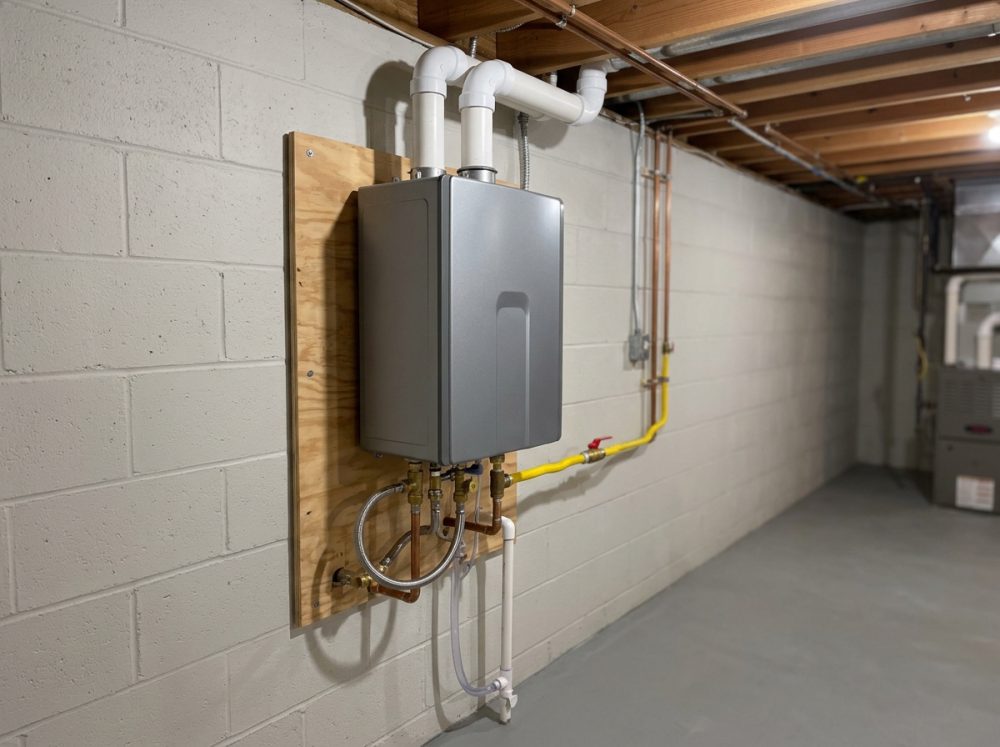
Going tankless isn't a like-for-like swap. A tankless (on-demand) water heater heats water only when you open a tap, so it needs far more power or fuel in a short burst than a tank does. In most homes, that means upgrading the gas line or the electrical service, and often the venting too.
That's why two houses with the same heater can end up with very different installs. The unit is the easy part. The work around it is what you should plan for.
Gas tankless: the gas line and the vent come first
A gas tankless unit burns a lot of fuel at once. The gas line that fed your old tank heater is often too small to supply it. A plumber has to check the pipe size, the length of the run, and what else is on that line, like a furnace, range, or dryer. If the line can't keep up, the heater will shut down or run weak when other appliances are on.
Venting is the other big piece. Most modern gas units are direct vent, which means sealed combustion. The unit pulls its air from outdoors through one pipe and sends exhaust out through another, so it doesn't use the air in your house. That gives you more flexibility about where it can go. High-efficiency condensing models also produce acidic condensate, which needs a proper drain and a vent material made for it. Old metal flue pipes usually can't be reused.
Electric tankless: it's really an electrical project
Electric units skip the gas and the venting, which sounds simpler. But they pull a large electrical load, and many whole-house models need several heavy-duty circuits. Older panels often don't have the room. Before you shop, find out how much spare capacity your panel has. If it needs an upgrade, that's a separate cost to plan for, and it's work for an electrician, not a plumber.
Electric tankless can make sense for a single bathroom or a small home. For a large household running a shower, dishwasher, and laundry at once, it can struggle in cold weather, because incoming water is colder and has to be heated further.
Sizing is about flow, not gallons
With a tank, you ask how many gallons you need. With tankless, you ask how many fixtures will run at the same time and how much the water has to be heated. Add up the flow of what could run together, such as two showers and a dishwasher. Then factor in your coldest incoming water temperature. A unit that's too small is the most common complaint after an install, and it can't be fixed with a setting.
Who each option suits
- Standard tank: lowest upfront cost and the simplest install. It keeps a reserve of hot water, but it uses floor space and can run out during heavy use.
- Tankless: endless hot water and a compact size. It costs more up front and needs those gas, electrical, or venting upgrades.
- Heat pump (hybrid): very efficient, but it needs room and airflow around it. It suits basements and larger utility spaces.
If you're staying in the house a long time, use hot water heavily, or are short on space, tankless earns its place. If you want the cheapest fix and a quick swap, a tank is hard to beat.
What to do if your water heater is leaking
A leak is the one problem you shouldn't wait on. Here's the order to work in:
- Turn off the power at the breaker, or set a gas unit to its off or pilot setting.
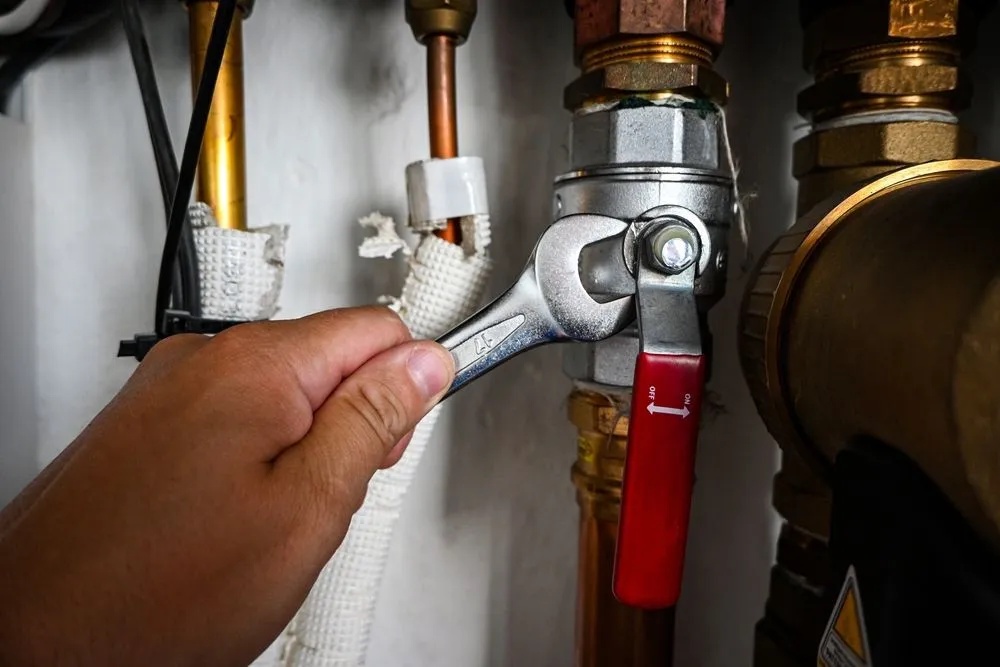
- Close the cold water shutoff valve on the pipe feeding the heater.
- Find where the water is coming from, if you can do it safely. Look at the pipe connections, the relief valve, and the bottom of the tank.
- Mop up and move anything valuable out of the way.
- Call a plumber.
The source matters. A loose fitting or a worn valve can often be repaired. Water seeping from the tank body itself usually means the inside has corroded through, and the answer is replacement. On a tankless unit, a leak often points to a connection or an internal component. Don't run it until it's been looked at.
Repairs: where gas and electric tankless differ
The symptoms can look the same, like no hot water or error codes, but the causes split by fuel type. On gas units, the usual suspects are the gas supply, the vent and air intake, and the igniter or flame sensor. On electric units, you're more likely looking at a tripped breaker, a failed heating element, or a wiring issue. Both kinds are affected by scale in hard water. A good technician checks the supply side first, then the unit.
Questions to ask before anyone installs
- Is my gas line or electrical panel big enough, and if not, what will it take?
- How will it be vented, and where will the condensate drain?
- How did you size the unit for my fixtures and my winter water temperature?
- Does my water hardness call for a softener or scale protection?
- Are permits and inspections included in the quote?
Frequently asked questions
Why don't plumbers like tankless water heaters?
It's less about the heaters and more about installs that weren't planned well. Undersized gas lines, poor venting, and hard water scale cause most of the callbacks. When the home is evaluated first and the unit is sized properly, tankless works well.
How much does it cost to just install a water heater?
It depends on the type, the size, and what's needed around it. A tank-for-tank swap is the simplest. Moving to tankless can add gas line, venting, or electrical work. Because those details vary house to house, the only reliable number is a written quote after someone has looked at your setup.
What should I do if my water heater has a leak?
Shut off the power or gas, close the cold water supply to the heater, and call a plumber. Don't keep running it while it drips, since the leak can get worse and damage floors and walls.
How much does it cost to fix a water heater leak?
It depends on where the leak is. A fitting or valve is usually a modest repair. A leaking tank can't be patched, so the cost becomes a replacement. A plumber can tell you which one you have after a quick inspection.
Getting it done right
If you're weighing tankless against other options, we can help. At Geer Plumbing Solutions, we handle water heaters in New Philadelphia, Dover, and the rest of Tuscarawas County. We're licensed and insured, and we'll take the time to explain the job and why we recommend what we do. You can reach us at 330-432-8073, Monday through Friday, 8 am to 5 pm.